




Across Latin America, civil society is navigating a profound transformation. International cooperation is shrinking, regulatory environments are tightening, and organizations are being asked to do more with fewer resources. What many are calling a “funding crisis” is in fact something deeper: a structural shift in how civic action is financed and sustained.
We believe that this moment requires more than adaptation. It requires reinvention. And one dynamic worth serious attention is the rise of Giving Circles, a model of collective philanthropy that is democratic, participatory, and scalable.
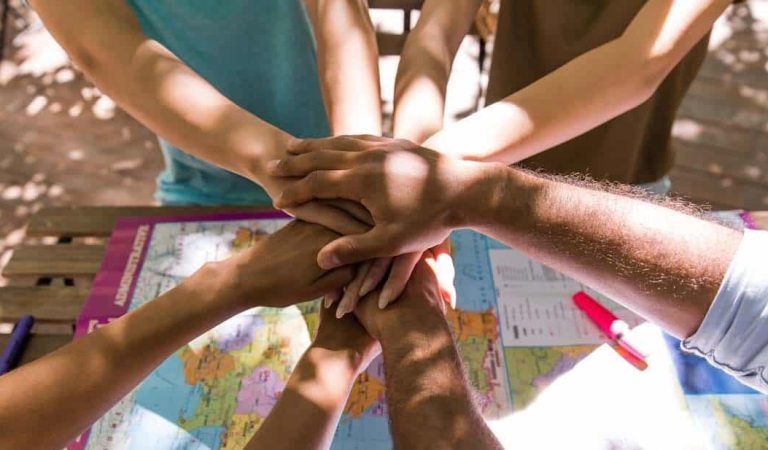
A Giving Circle is a simple but powerful idea. A group of individuals aligned around a cause, geography, or shared identity commit to contributing a set amount of money on a recurring basis. Those contributions are pooled, and the members collectively decide which nonprofit organizations will receive the funds. The cycle repeats, turning giving into an ongoing civic practice rather than a one-time transaction.
According to Philanthropy Together, giving circles are a form of participatory philanthropy in which members jointly determine where resources flow. Many circles go beyond financial contributions, engaging members in volunteering, learning, and direct interaction with the organizations they support. In this sense, they are not only fundraising mechanisms; they are community-building platforms.
The model is not new. Giving circles have existed in the United States since the 1980s, often initiated by women who wanted to increase their collective impact while strengthening community ties. Since 2007, the number of giving circles in the U.S. has tripled. Five years ago, researchers estimated that nearly 2,500 giving circles had engaged 150,000 donors and distributed close to $1.3 billion to nonprofits.
The growth has continued at remarkable speed. Recent research indicates that there are now nearly 4,000 giving circles in the U.S., engaging approximately 370,000 members and mobilizing more than $3.1 billion between 2017 and 2023. This represents more than a doubling of earlier totals. What began as small community initiatives has evolved into a multi-billion-dollar force in philanthropy.
The significance of these figures lies not only in the total amounts raised, but in what they represent. Giving circles demonstrate that modest, recurring contributions — when organized collectively — can produce substantial, sustained funding streams. They show that philanthropic influence does not have to be concentrated in a handful of large foundations. It can be distributed among thousands of engaged citizens.
One of the most strategic dimensions of giving circles, emphasized by platforms such as Grapevine, is that they are built around recurring contribution rather than one-time crowdfunding. Members do not simply respond to isolated emergencies; they commit to a rhythm of collective investment. This regularity creates predictability for supported organizations and fosters long-term relationships between donors and grantees. In environments marked by volatility and short funding cycles — as is often the case in Latin America — the stability of structured, recurring pooled giving can be as transformative as the total amount raised.
Giving circles function as spaces of leadership development. Members facilitate discussions, evaluate nonprofit proposals, deliberate priorities, and practice consensus-building. In doing so, they strengthen skills that extend beyond philanthropy: communication, governance, shared decision-making, and accountability. In contexts where democratic culture is under pressure, this participatory dimension is not incidental. Collective giving becomes a lived practice of civic responsibility — a microcosm of the democratic values that many organizations across the region seek to defend.
This democratic redistribution of giving power is particularly relevant for Latin America. In many contexts across the region, civil society organizations rely heavily on external donors. While international solidarity remains essential, overdependence creates vulnerability. Funding cycles shift. Political priorities change. Currency volatility disrupts planning. When resources are concentrated, risk is concentrated.
Giving circles offer a complementary path: distributed sustainability. Instead of depending on a single large grant, organizations cultivate a broader base of recurring contributors. Even relatively small monthly commitments, when aggregated, can generate meaningful annual grants.
Imagine, for example, a giving circle formed by 800 women across Latin America and the diaspora committed to advancing economic justice for women survivors of gender-based violence. Each member contributes $40 per month. That collective commitment would generate nearly $384,000 per year — enough to support for instance legal aid clinics, seed microenterprise programs for survivors, expand digital security training for women leaders, or sustain various feminist organizations that are often chronically underfunded. Beyond the financial impact, those 800 women would be connected through shared purpose, learning together about structural inequality, amplifying one another’s leadership, and building a cross-border network of solidarity that strengthens the very fabric of regional feminist movements.
Now imagine a second circle focused on democratic resilience and human rights defense. A network of young professionals, academics, entrepreneurs, and diaspora members — 1,500 individuals contributing $50 per month — could mobilize $900,000 annually. Those resources could sustain independent investigative journalism, support strategic litigation before regional human rights bodies, protect activists facing criminalization, or invest in civic technology that expands transparency and participation. In contexts where democratic institutions are under strain, this kind of distributed civic capital becomes more than funding; it becomes infrastructure for resistance, accountability, and renewal.
The math is simple; the impact is profound.
Beyond financial resilience, giving circles cultivate civic belonging. Research summarized by Candid highlights how these structures strengthen engagement, expand networks, and deepen members’ understanding of social issues. Participants do not simply write checks; they deliberate, learn, and build relationships. In doing so, they become stakeholders in the sustainability of democracy and human rights.
For Latin America, this dynamic holds particular promise in relation to diaspora communities. Millions of Latin Americans live abroad, often deeply committed to the future of their home countries but unsure how to engage effectively. A giving circle can provide structure, transparency, and collective due diligence. It can transform individual remittances or sporadic donations into strategic, coordinated civic investment.
Giving circles also function as leadership incubators. Participatory grantmaking requires facilitation, negotiation, accountability, and shared governance. In that sense, collective philanthropy becomes a training ground for democratic practice. In contexts where democratic institutions are under strain, practicing democracy within philanthropic communities is not trivial; it is formative.
As civil society organizations, we have to see giving circles not as a replacement for institutional philanthropy, but as part of a broader ecosystem of reinvention. Civil society sustainability is no longer synonymous with operational continuity. It is about relevance, reinvention, and building wider social and economic bases of support. In a transforming ecosystem, creativity is not a luxury; it is a strategic tool of survival and expansion.
The rise of giving circles globally suggests that collective giving is more than a trend. It is a movement. It reflects a desire among citizens to move from passive support to active participation, from isolated donations to shared responsibility.
The question for Latin America is not whether we can replicate the U.S. model exactly. Our contexts differ. Our regulatory frameworks differ. Our philanthropic cultures differ. The question is how we adapt the principle of collective, democratic giving to our realities , incorporating diaspora communities, young professionals, feminist networks, digital platforms, and regional solidarity.
In times of fiscal deficit and political pressure, expanding who funds democracy becomes a strategic imperative. Giving circles invite more people into that responsibility. They transform supporters into co-architects of impact.
And perhaps most importantly, they remind us of something essential: democracy is strongest when many people contribute, together.