

When an AI company refused to enable surveillance and autonomous weapons — and consumers rewarded it — a new equation emerged: ethical technology is not a sacrifice of profit. It is the source of it.
The Moment That Changed Everything
On February 27, 2026, a deadline passed. And the world paid attention.
For weeks, the Pentagon — officially rebranded the «Department of War» under an executive order signed by President Trump in September 2025, had been locked in negotiations with Anthropic, the AI safety company behind the Claude assistant. The Defense Department, operating under a January 2026 memo requiring all AI contracts to include «any lawful use» language, demanded that Anthropic remove two specific restrictions embedded in its $200 million contract signed in July 2025: a prohibition against using Claude for mass domestic surveillance of American citizens, and a prohibition against deploying it to power fully autonomous weapons systems.
Anthropic refused.
CEO Dario Amodei stated publicly that the company could not «in good conscience» accept the Pentagon’s demands, arguing that in a narrow but critical set of cases, AI can undermine rather than defend democratic values. On the evening of February 27, President Trump ordered every federal agency to immediately cease using Anthropic’s products. Defense Secretary Pete Hegseth went further, designating Anthropic a «supply chain risk», a classification historically reserved for foreign adversaries, never before applied to a domestic American company.
Within hours, OpenAI stepped in and announced its own classified deployment deal with the Pentagon. The contrast was immediate, pointed, and profoundly consequential.
The Lines That Were Drawn
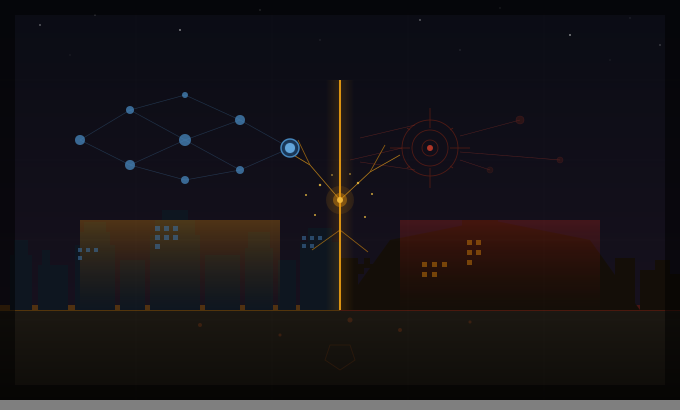
Anthropic’s reasoning was both technical and ethical. On mass domestic surveillance, the company argued that AI can aggregate commercially available data about Americans’ movements, associations, and online behavior at a speed and scale that existing privacy law was never designed to govern, effectively creating a comprehensive surveillance infrastructure that would not otherwise be possible. On autonomous weapons, the concern was equally clear: removing human judgment from lethal decision-making crosses a line that no contract should enable.
The Pentagon’s counter-argument was procedural: existing federal law already prohibits surveillance and autonomous weapons, making Anthropic’s contractual restrictions redundant. Anthropic’s response cut to the core of the issue, a legal restriction that a government can change at any time is categorically different from a contractual restriction that an AI company negotiates and retains. One is a promise with teeth. The other is a preference.
What made the standoff more remarkable still was the operational reality: by most accounts, Anthropic’s two restrictions had never been triggered in actual Pentagon use. Senior defense officials who worked with Claude described it as superior to alternatives. It had been the first AI model deployed on classified military networks. And yet the administration was willing to burn the relationship entirely — even threatening to invoke the Defense Production Act, a Korean War-era emergency statute, to compel compliance — rather than accept a private company’s ethical limits.
«These latter two threats are inherently contradictory: one labels us a security risk; the other labels Claude as essential to national security.» — Dario Amodei, Anthropic CEO
OpenAI Steps In — And Faces a Different Kind of Reckoning
Hours after Trump’s ban was announced, OpenAI struck its own classified deployment contract with the Pentagon. CEO Sam Altman publicly claimed the agreement included safeguards mirroring Anthropic’s red lines, no mass domestic surveillance, no autonomous weapons, no high-stakes automated decisions without human oversight. Altman even acknowledged that Anthropic’s blacklisting was «a bad decision» and a «scary precedent.»
But the timing told its own story. Legal analysts noted that the safeguards in OpenAI’s agreement were reportedly tied to «all lawful use», meaning they could be modified as U.S. law changes, leaving them far less durable than the contractual red lines Anthropic had refused to surrender. The Electronic Frontier Foundation raised an immediate concern: OpenAI’s deal was negotiated under time pressure, behind closed doors, without congressional oversight. And neither agreement, notably, prohibited mass surveillance of foreign nationals.
The public saw the contrast clearly. On social media, the backlash against OpenAI was swift and vocal. Reddit threads urging users to cancel ChatGPT subscriptions accumulated tens of thousands of upvotes. The hashtag #QuitGPT began circulating on X and Instagram. Some users cited OpenAI President Greg Brockman’s prior $25 million donation to a pro-Trump super PAC as context for the company’s pivot. Phrases like «do the right thing» and «please stand up for civil liberties» were scrawled in chalk outside OpenAI’s San Francisco offices.
The Consumer Verdict: Ethics Converts to Growth
What happened next was not what conventional business logic would predict. The government banned Anthropic. Hundreds of millions of dollars in contracts were put at risk. And consumers voted with their subscriptions.
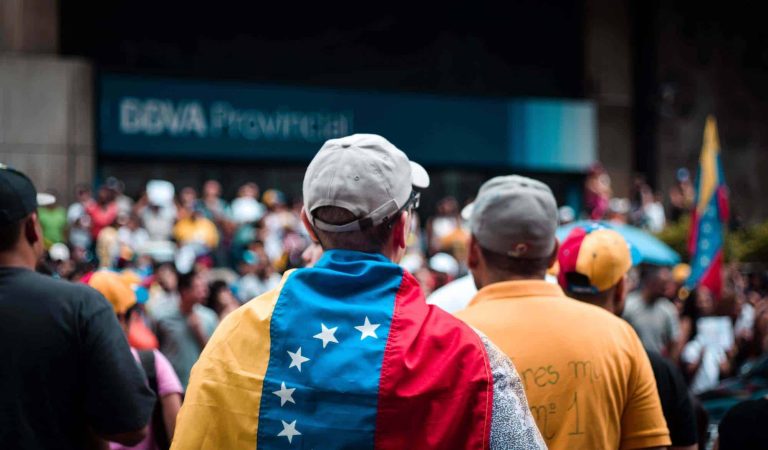
By Saturday, March 1, 2026 — one day after the Pentagon’s blacklisting, Claude had surged to the Number 1 position on Apple’s U.S. App Store, overtaking ChatGPT for the first time. The app, which had sat at position 131 as recently as January 30, had climbed from sixth on Wednesday, to fourth on Thursday, to first by the weekend. Pop star Katy Perry posted a screenshot of Anthropic’s Pro subscription plan with a heart emoji. Messages like «you give us courage» were chalked on the sidewalk outside Anthropic’s offices.
The numbers behind the surge were striking. Daily active users on Claude reached 11.3 million on March 2, up 183% since January. Daily sign-ups broke all-time records every day during the week of the dispute. Free users increased more than 60% since the start of the year. Paid subscribers more than doubled. Daily downloads of the Claude mobile app reached 149,000, surpassing ChatGPT’s 124,000. Claude’s web traffic grew 43% month-over-month in February and 297% year-over-year, while ChatGPT’s web traffic dropped 6.5% in the same period.
Anthropic’s broader financial picture made the message even clearer. The company was already reporting a $14 billion revenue run rate in 2026 and a $380 billion valuation after its Series G funding round. The lost Pentagon contract, worth up to $200 million, represented a fraction of that base. The consumer surge triggered by the ethical stand may well have generated more financial value than the contract itself.
Anthropic leaned into the momentum. The company made its memory import feature free for all users, allowing people to migrate their conversation history from other AI platforms — and expanded memory across conversations to its free tier. These were not accidental decisions. They were an invitation: come, and stay.
«Anthropic has shown that taking a public stance on ethics can translate directly into user growth.» — ResultSense, March 2026
Why This Matters Beyond the Tech Industry
Those of us working in civil society, philanthropy, and the defense of democracy around the world have spent years making a particular argument: that doing good is strategically smart, not just morally correct. That investing in human rights and democratic institutions prevents the far more expensive crises that follow their collapse. That responsible actors, in government, in business, in international cooperation, ultimately build more durable and more trusted institutions.
The Anthropic episode is the clearest recent demonstration of this logic playing out in real time, at massive scale, in the private sector.
The difference is that Anthropic operated inside one of the most powerful and pressurized commercial ecosystems in the world, under threat of a government ban and hundreds of millions of dollars in contract losses, and held that line anyway. And the market rewarded it.
The New Equation: Shared Interests, Shared Responsibility
For too long, the worlds of impact-driven civil society and profit-driven capital have been treated as operating in parallel, occasionally intersecting through philanthropy or corporate social responsibility programs, but fundamentally separate. The Anthropic story dismantles that assumption.
What Anthropic demonstrated is that this logic applies not just to specialized impact investors or philanthropic foundations, but to mainstream commercial companies operating in intensely competitive markets. The company’s ethical stance generated brand trust, user acquisition, subscriber growth, and international attention, all standard business metrics. The London Mayor wrote to Amodei offering support. Allied governments began reassessing their AI infrastructure relationships. The legal and reputational costs of the government’s overreach are being borne not by Anthropic, but by the administration that escalated.
The message to technology companies, investors, and capital allocators is direct: your agenda and ours are not in conflict. Protecting civil liberties, defending democratic values, refusing to enable surveillance or autonomous violence, these are not constraints on profit. They are drivers of it. Users, consumers, and civil society will increasingly align their dollars with companies whose values they trust.
Governance Cannot Wait
Oxford’s Brianna Rosen, writing in the immediate aftermath of the Pentagon dispute, identified the deeper structural issue: this is not primarily a story about one company and one government. It is a story about a governance gap. The question of what ethical limits should govern military AI , around surveillance, around autonomous weapons, around accountability, is too consequential to be resolved through contract negotiations between a CEO and a Defense Secretary. It requires legislative frameworks, congressional oversight, and democratic deliberation.
The Electronic Frontier Foundation made a related point: privacy protections should not depend on the private decisions of a handful of powerful executives. Today, Anthropic held the line. Tomorrow, another company may not. Without enforceable legal frameworks, citizens’ rights exist at the discretion of corporate policy, and corporate policy can change.
Doing Good Is an Investment
The Anthropic story ends — for now — with the company in court, challenging a designation it calls «unprecedented and unlawful». But it also ends with Claude as the most downloaded app in America, with more than a million new users signing up daily, with paid subscriptions doubled, and with a global wave of goodwill that no marketing budget could have purchased.
That is the new equation. Not the old one that says profit and principle are in tension. The new one: ethical behavior builds the trust that builds the user base that builds the revenue. Doing good is not the cost of doing business responsibly. It is the investment.
For civil society organizations working on democracy, human rights, and social justice, this moment carries a message: our agenda and the agenda of the private sector are not inevitably separate. There is a growing constituency of citizens who vote with their attention, their subscriptions, and their loyalty for companies and institutions that share their values.
The future of democracy will be written in legislation and in courts. But it will also be written in platforms, in networks, in data practices, and in the choices that companies make when a government ultimatum arrives at 5:01 p.m. on a February afternoon.
Anthropic made its choice. Consumers made theirs. Now the rest of us must make ours.
This article was prepared and curated by Articulate Foundation with the assistance of AI, drawing on publicly reported events from February–March 2026, and informed by the organization’s broader work on philanthropy, impact investing, technology, democratic resilience, and civil society sustainability.