




Preventing authoritarianism and strengthening democracies must be at the center of the global agenda. However, despite the critical importance of ensuring fair, participatory, and above all stable political systems, the reality is that investments in this area are often comparatively smaller than those allocated to addressing humanitarian and human rights crises that commonly originate in failed systems. Below, we present several reflections on this disparity and its implications for the sustainability of long-term cooperation and financing schemes, as well as for the quality of life of people facing adverse and hostile contexts. We ultimately propose that the principle of intergenerational shared responsibility and efforts at solidarity be made more effective in the difficult times we face.
Investment in Prevention: An Invisible but Sure Effort
Strengthening democratic institutions and promoting citizen participation require a sustained preventive approach. Preservation is not about exceptional measures, but rather about daily and structural investments that, although often invisible, are essential to prevent a democratic system from collapsing and leading to the worst crises for citizens, the region, and the world.
The role of institutions in protecting democracy is unquestionable. From electoral commissions to courts of justice, these entities are the pillars that ensure elections are free, rights are respected, the law is upheld, and conflicts are resolved peacefully. However, in many countries, these institutions are underfunded or politicized, which weakens their ability to act as true guardians of democracy.
This would include investment in electoral commissions, courts, local governments, national human rights institutions, the media, and anti-corruption agencies. Although specific amounts vary by country, the proportions allocated to these areas are typically low.
Additionally, there is a disparity in the budgets of key international human rights institutions, whose mandates empower them to enhance governments’ capacity to respect and protect human rights as well as assist in democratic strengthening processes.
The international agencies and organizations responsible for these issues have considerably low budgets relative to the work they do or could do. The Office of the United Nations High Commissioner for Human Rights (OHCHR), for example, operated in 2023 with a budget of approximately $185 million, an amount that, while significant, represents only a fraction of 5 percent of the total United Nations budget. OHCHR has noted that although this allocation, together with voluntary contributions, represented an increase compared to previous years, it fell far short of the $452.4 million in funding needs outlined in its 2023 annual appeal to effectively respond to all requests for assistance received by the Office.
Other offices and mechanisms dedicated to political and peace issues also operate with significantly low budgets relative to the enormous demands and functions they must fulfill. For example, the UN Peacebuilding Fund, which aims to support joint UN responses during critical peacebuilding opportunities by linking the pillars of development, human rights, and humanitarian aid, has been allocated $906,990,188 for the 2020–2026 period through voluntary contributions from Member States. With an annual average of $129,570,027 per year to address prevention and peace, this amount is insufficient to adequately cover all the needs of countries affected by complex crises.
Meanwhile, an allocation of $711 million has been proposed for Special Political Missions (SPMs), which fall under the supervision of the UN Department of Political and Peacebuilding Affairs (DPPA). This amount represents a significant portion of the DPPA’s operational budget, allocated to carry out interventions and mediation efforts in situations of political crisis around the world.
If these figures already seem meager, the situation worsens when assessing regional cooperation in the promotion and protection of human rights. In 2023, the Inter-American Court of Human Rights received a total of $7,049,732.12, of which $5,024,000 (71.27%) came from the OAS Regular Fund. Voluntary contributions from member states totaled only $127,619.81 (1.81%), while $1,898,112.31 (26.85%) came from international cooperation projects that the Court must prepare and undertake in addition to the work required of it under the American Convention, which protects approximately 603,521,644 people in the 23 member states. Furthermore, the budget approved for the Inter-American Commission on Human Rights in 2023 was $10,230,700, of which $7,393,200 was allocated to personnel expenses and $2,837,500 to operating expenses.
These budgets generally barely cover the operating costs of these institutions and represent a tiny fraction of what international humanitarian responses mobilize for crisis situations.
The Cost of Reacting
When a democracy begins to crumble, the costs of reacting to the crisis are generally much higher than those of preventing it. Judicial interventions, early or repeat elections, military responses, and humanitarian aid are just some of the extraordinary expenses that arise when democratic institutions are overwhelmed.
Democratic crises are often accompanied by social mobilizations, protests, and unrest, which also require increased spending on public security to prevent widespread violence from breaking out, as well as extraordinary international monitoring efforts. These types of costs are not only high but can also have lasting effects on social and political stability.
The impact is also felt in the international response. Despite the critical importance of prevention, democratic strengthening, and the human rights agenda in international forums, it is hard not to notice a troubling disparity in the distribution of global funds. Funding allocated to immediate humanitarian causes—such as natural disasters, refugee crises, or addressing large-scale survival needs due to lack of access to food, education, and public health—is considerably greater than that dedicated to preventive efforts against these emergencies through investment in democracy and human rights.
The European Union has announced an initial humanitarian budget of1.9 billion euros for 2025. Globally, the United Nations and its humanitarian partners have launched an appeal for $47 billion for 2025, with the aim of supporting 190 million people facing crisis situations worldwide. This underscores the magnitude of humanitarian needs, highlighting the urgent need for resources to assist vulnerable populations affected by conflicts, natural disasters, and other emergencies—many of which have resulted from failures in the functioning of governments and institutions. Even the UN’s entire regular budget ($3.72 billion) is a fraction of global humanitarian aid spending.
These emergency situations naturally tend to attract large amounts of funding quickly. For example, the total humanitarian aid mobilized for Ukraine since the start of the Russian invasion in February 2022 includes several key contributions from various international actors. The European Union, for instance, allocated €485 million in humanitarian aid in 2022 alone and, from then through 2025, has committed more than €1.09 billion to humanitarian programs. France, for its part, has allocated more than €434 million in humanitarian aid, including contributions to international organizations and specific projects.
In addition, UNHCR and other international agencies have been working intensively in Ukraine. In terms of total assistance, the United States has exceeded $114.15 billion, including humanitarian, military, and financial aid, since the start of the conflict.
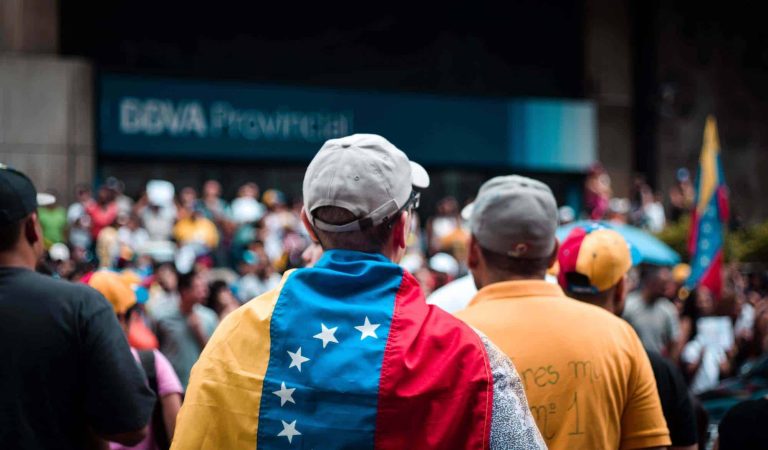
The humanitarian crisis in Venezuela has also mobilized a significant amount of resources. According to the United Nations Office for the Coordination of Humanitarian Affairs (OCHA), between 2019 and 2023, humanitarian needs in Venezuela have exceeded $1.7 billion, with a primary focus on assisting more than 7 million people affected by shortages of food, basic services, and medical care. This figure, however, falls far short of meeting the needs of the approximately 19 million people requiring humanitarian assistance in the country. In 2023, Venezuela’s Humanitarian Response Plan received $402.2 million, representing just 55.9% of the required funds. By 2024, total funding requirements for humanitarian assistance in Venezuela are estimated to reach $650 million, underscoring the critical gap between needs and available resources. It is worth noting that from fiscal year 2017 through 2024, the U.S. government provided more than $3.5 billion in humanitarian aid to Venezuela and to countries hosting Venezuelans.
When examining other crises in the hemisphere that share certain traits of democratic breakdown with Venezuela, it becomes evident that investment in promoting human rights, institutional strengthening, and freedoms is considerably lower than that allocated exclusively to the humanitarian response in Venezuela. This difference highlights a troubling contrast, as the lack of more significant corrective interventions could cause these countries to follow the same path of democratic decline, which should serve as a mirror of what might happen in the future regarding the impact and costs of addressing such crises.
In the case of Nicaragua, international support—which has focused primarily on democracy and human rights programs, given the authoritarian nature of the Ortega-Murillo regime—is relatively low. In 2024, the United States allocated $15 million to promote democracy and religious freedom, with the aim of supporting civil society and movements resisting authoritarianism. At the European level, the European Union has allocated more than 60 million euros since 2016 to support communities affected by the political crisis. In the case of Cuba, the situation is not very different. In 2024, the United States allocated $25 million specifically for democracy programs in the country, focusing on strengthening independent journalists, human rights activists, and organizations that defend civic space.
We Have a Clear Need to Be More Cost-Effective
There is a notable imbalance in funding between immediate humanitarian aid and efforts to strengthen democracy. While humanitarian aid receives large sums due to the urgency of crises, democratic strengthening and the protection of human rights receive far more limited resources. This reflects a short-term vision that prioritizes visible results but ignores the fact that, without solid democratic institutions, social and humanitarian crises will continue to occur. Institutional weakness is often the root cause of these crises, making prevention a far more cost-effective investment than reactive intervention in the long term. Without preventing democratic erosion and strengthening institutions, these crises will continue to recur, perpetuating a cycle of reactive rather than proactive intervention.
Donors tend to focus on immediate crises because their results are tangible and rapid, while projects aimed at strengthening democracy, though essential, are more abstract and difficult to measure. However, by failing to invest in democracy and human rights, nations remain trapped in a cycle of recurring crises that demand more resources as the consequences worsen. Preventive efforts, such as strengthening democratic institutions and civic education, would not only improve political stability but also reduce the need for humanitarian interventions in the future.
The lack of these preventive investments in democracy creates a cycle of crises that not only depletes international resources but also drags the most vulnerable populations into situations of greater suffering and despair.
The interdependence between democracy and humanitarian causes is clear, yet often underestimated. We must actively support democracy by investing in its fundamental pillars: civil society, human rights defenders, organizations, activists, and institutions that promote justice and well-being. These entities are key to building resilient democratic systems. It is essential to provide resources to those working on the ground, in difficult and often repressive contexts, to ensure they can continue protecting fundamental rights and fighting for a more just future. Likewise, it is crucial to strengthen the international bodies that safeguard these actors, ensuring they have the necessary support to address challenges and to enhance the invaluable work they do in support of democracy and human rights.
While humanitarian programs are essential, efforts to build robust democratic systems must not be overshadowed. These projects should be viewed not as an expense, but as a strategic investment in long-term peace and stability. Preventing authoritarianism and strengthening democratic institutions not only alleviate suffering but are also essential for reducing the human and economic costs of recurring crises.