





The Lessons from Venezuela’s Democratic Resistance
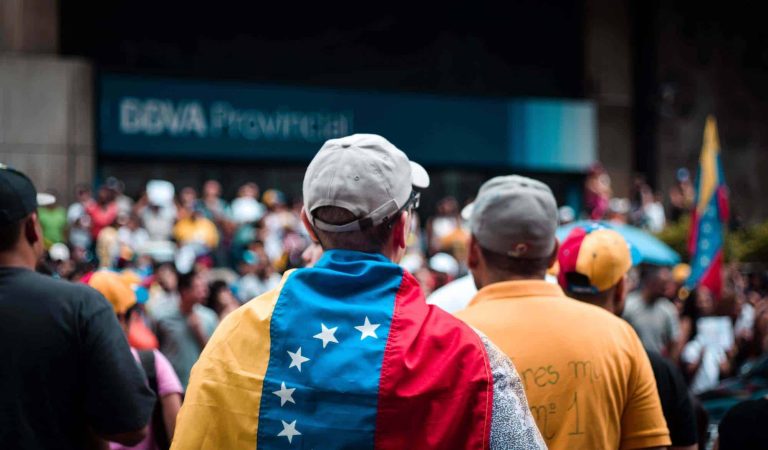
On December 10, 2025, the Nobel Peace Prize ceremony placed Venezuela at the center of a global conversation on democracy, peace, and resistance to authoritarianism. Through the address delivered by Jørgen Watne Frydnes, Chair of the Norwegian Nobel Committee, and the Nobel Peace Prize lecture delivered on behalf of Maria Corina Machado by her daughter, Ana Corina Sosa Machado, a powerful story emerged — not only of courage under repression, but of how technology and digital tools can empower citizens living under dictatorship.
In a country where institutions have been dismantled, media silenced, and dissent criminalized, Venezuelan civil society transformed technology into a means of survival, coordination, and truth. This was not innovation for its own sake. It was technology placed deliberately in the service of dignity, collective action, and democratic defense.
Civic Technology Under Repression
Authoritarian regimes depend on opacity, fear, and isolation. In Venezuela, these conditions were not accidental; they were systematically engineered through surveillance, censorship, intimidation, and the criminalization of public participation. As Frydnes warned, Venezuela has become a place where “anyone who still believes in stating the truth out loud may disappear violently into a system built specifically to eradicate this belief.”
Against this backdrop, Venezuelans repurposed digital tools not as conveniences, but as instruments of civic power. When formal democratic channels collapsed, networks took their place. Informal, decentralized, and resilient systems emerged, sustained by trust rather than authority.
Both speeches highlighted how the democratic movement built a nationwide, citizen-led digital infrastructure capable of operating under extreme risk. Hundreds of thousands of volunteers coordinated across more than 30,000 polling stations. Mobile applications and digital platforms were used to scan, upload, and verify electoral tally sheets. Encrypted messaging services allowed coordination under constant surveillance. Diaspora-based call centers mobilized Venezuelans abroad. Satellite connectivity and improvised hardware, including devices hidden inside food trucks, helped bypass state control of communications.
Technology did not replace people. It amplified trust, coordination, and courage among ordinary citizens who understood that democracy could no longer rely on institutions alone.
Defending Democracy with Data and Documentation
One of the most striking moments described during the ceremony was the defense of the 2024 presidential election results. When the regime attempted to falsify outcomes, citizens responded not with violence, but with evidence.
In the Nobel lecture, Ana Corina Sosa Machado described how, for more than a year, the democratic movement prepared not only to vote, but to defend the vote. “We had been building the infrastructure to do so,” she explained, an infrastructure that combined human commitment with digital capacity.
On election day, when authorities attempted to block citizen witnesses from receiving the official tally sheets — the actas — the system held. The actas were photographed, scanned, uploaded, cross-checked, and published online within hours. They arrived “by phone, then WhatsApp, then photographed, then scanned, and finally carried by hand, by mule, even by canoe.”
What authoritarian power sought to erase through coercion, citizens preserved through documentation. Data became a shield. Transparency became protection. Technology, used collectively and ethically, became a form of nonviolent resistance.
In authoritarian contexts, data can be dangerous. But when owned, distributed, and safeguarded by citizens, it becomes a powerful tool to preserve truth and legitimacy.
Technology, Feminist Leadership, and Collective Empowerment
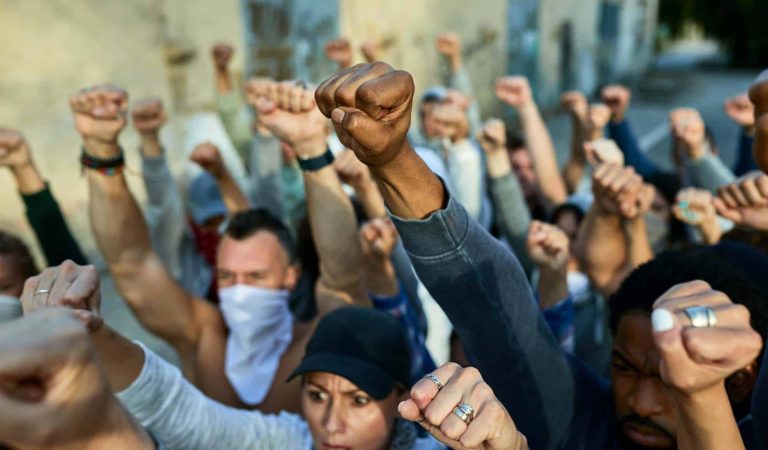
The Venezuelan experience also challenges dominant narratives about technology and power. These digital tools were not monopolized by elites or institutions. They were deployed through horizontal, community-based networks, often sustained by women, caregivers, teachers, students, and volunteers operating from kitchens, churches, and informal spaces.
Training sessions took place at dawn in private homes. Printed manuals circulated like contraband. Digital literacy became a form of civic education and mutual care.
This reflects a feminist logic of technology: relational rather than hierarchical, decentralized rather than extractive, adaptive rather than rigid. Technology was not neutral. It was intentionally aligned with democratic values, ethical restraint, and nonviolent action.
The Nobel lecture itself embodied this continuity. Delivered by Machado’s daughter in her absence, it underscored how leadership, memory, and resistance are transmitted across generations, and how political struggle is also familial, intimate, and deeply human.
A Global Lesson for Democracy and Peace
The Nobel Committee emphasized that democracy and peace are inseparable. The Venezuelan case adds a crucial contemporary insight: today, democracy is also inseparable from digital capacity.
Authoritarian regimes are learning from one another, sharing surveillance technologies and weaponizing digital tools. Democratic movements must do the same — but with radically different values. As Frydnes stated, “The instruments of democracy are the instruments of peace.” In the digital age, those instruments increasingly include platforms, networks, data practices, and collective technological literacy.
Venezuela demonstrates that technology can reduce fear by reducing isolation, restore agency where institutions fail, and outperform repression when rooted in trust and participation. This is not about “tech solutions” to political problems. It is about people using technology to defend what is human.
Why This Matters for Articulate Foundation
At Articulate Foundation, we work at the intersection of technology, social justice, and democratic resilience. The Venezuelan experience reinforces a core conviction of our work: technology does not save democracies. People do: when they have the right tools, knowledge, and networks.
Ethical and responsible uses of technology can expand civic space, protect truth, and enable collective action even under the harshest conditions. The story told in Oslo is not only Venezuela’s. It is a warning and an invitation to civil society, technologists, philanthropies, and democratic actors worldwide.
The future of democracy will be shaped not only in parliaments and courts, but also in networks, platforms, data practices, and digital solidarity.
And that future is still being written.
This article was developed by the Articulate Foundation team, with the support of Artificial Intelligence tools for content writing and curation, demonstrating how technology can be used for social good.